
Sourcing Guide
Connect the axle nameplate, full adjuster reference, installed position and quotation line when sourcing Hande axle brake parts. Keep similar HD and DZ numbers traceable through receiving.
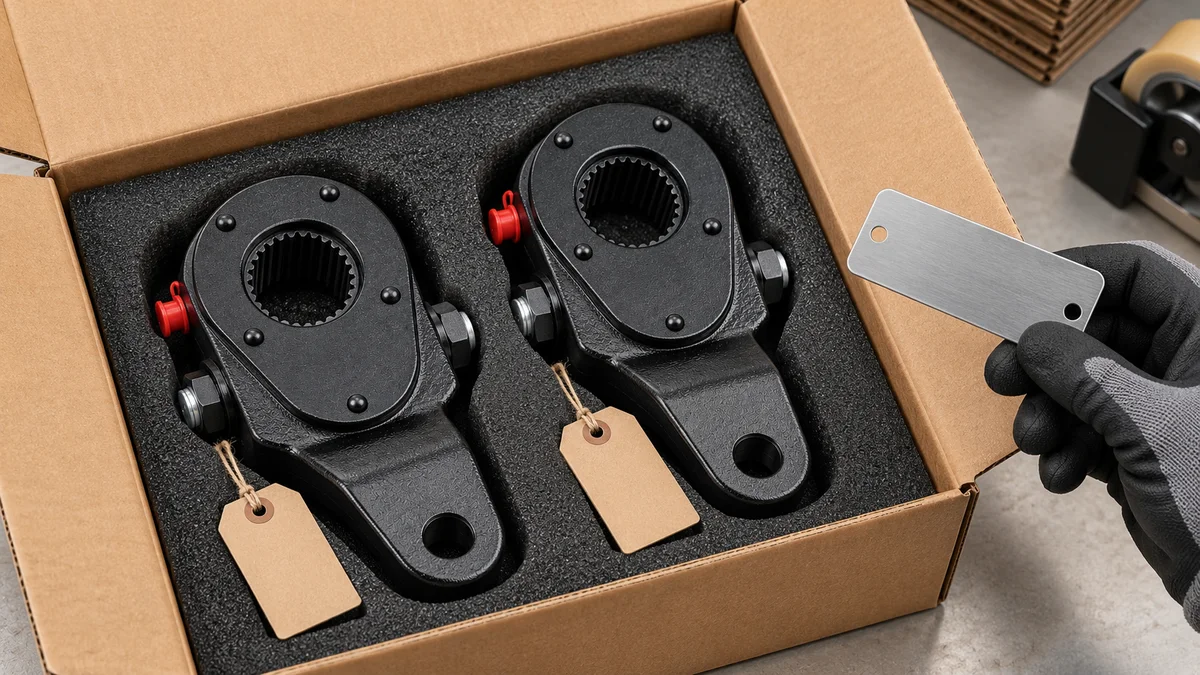
A workshop can send a clear photograph of a brake adjuster and still receive an unclear quotation. The missing link is often the record connecting that component to its axle and purchase line. For Hande axle automatic slack adjusters, build that connection before requesting prices: axle identification → old-part reference → installed position → quotation line.
This approach is useful for distributors collecting requests from several workshops, or fleets ordering parts for trucks with different axle configurations. A truck brand helps start the search. The axle record and the actual component provide the detail needed to review the proposed replacement.
Photograph the axle nameplate where accessible and copy its readable identification into the enquiry. Add the vehicle model and chassis information if available. Keep the nameplate image with a wider photograph showing where the required adjuster is installed. A close-up of the adjuster alone loses the context that distinguishes one axle or side from another.
Give each requested position a simple buyer reference, such as “Truck A, axle 2, left.” State which direction defines left and right so the workshop and supplier use the same convention. This buyer reference is an organising aid; it is not a replacement part number or a statement of fitment.
The current Hande product family contains seven supplier entries covering the following eight references. They are sourcing clues that must be compared with the installed axle and old part. The family record does not provide a complete left/right, front/rear or spline-count mapping.
| Reference recorded | How to retain it in the enquiry | What remains to confirm |
|---|---|---|
| HD90149340116 | Keep the complete number and marking photograph. | Axle, side, spline detail and arm geometry. |
| HD90149340115 | Use a separate line from the 40116 reference. | Do not infer a paired side from the final digits. |
| HD90149340117 | Keep 40117 legible in the photo and text. | Installed position and interface dimensions. |
| HD90149340118 | Retain a distinct line even if the housing looks similar. | Exact axle and old-part comparison. |
| DZ90129348002 | Preserve the DZ prefix and all digits. | The source includes a crane-chassis clue; confirm the actual application. |
| HD90129346241 | Keep the full HD901293 number sequence. | The source includes crane-chassis and bus clues; these do not establish universal fitment. |
| HD90009440449; HD90009440450 | The supplier entry lists both numbers; request each required item separately. | Position, side and spline count from the actual old part. |
Numbers that differ by one digit should stay separate throughout the enquiry. Numerical proximity does not prove that two adjusters form a left/right pair, and a common prefix does not establish interchangeability. If the old marking is incomplete, retain the readable characters and identify the missing section as unreadable.
Use one folder or message group for each buyer reference. Include the axle nameplate, installed wide view, complete marking, both faces of the removed unit and a straight-on spline photograph. Add a full side profile showing the arm offset and end hole. The installed view should retain the relationship between brake chamber, pushrod and adjuster arm.
If the workshop can reliably establish spline or tooth count, include it with a clear photograph. Otherwise request confirmation instead of estimating from an angled image. For measured arm or hole dimensions, show where the measurement starts and ends. A number without defined measurement points is difficult to compare with a supplier drawing.
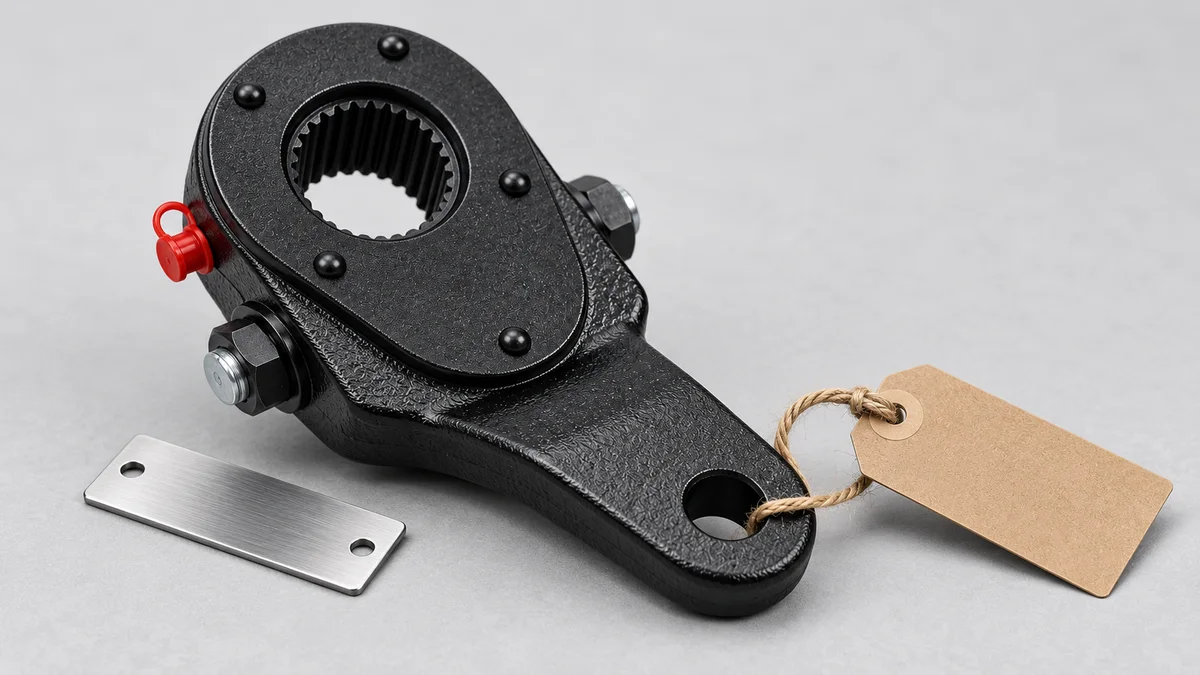
A useful RFQ line contains the buyer reference, complete requested part number, vehicle and axle identification, installed side, quantity and photo-folder reference. Ask the supplier to return the proposed number and its photograph against that same line. This makes a changed or alternative reference visible before approval.
For example, “Truck A / axle 2 / left / old marking HD90149340116 / quantity 1 / photos A-2-L” is a traceable request. It remains subject to matching review; the example does not assign that reference to a particular axle or side. If an alternative is proposed, ask for the basis of the match and any dimensional or orientation differences.
Clarify what the quoted item includes. An adjuster, separate fittings and other brake components should be described clearly, with packing requirements and quantity per line. Keep price, lead time and availability as quotation terms to be confirmed for the actual order.
Before shipment, ask for a packing list that preserves the approved reference and quantity. A photo of the part beside its carton label helps connect the delivered item to the quotation. In a mixed order, give each reference its own labelled compartment or package so similar black housings remain distinguishable.
At receiving, compare the carton label, approved quotation and physical marking before issuing the part to the workshop. Retain the incoming photograph with the original buyer reference. If the marking, spline detail or arm geometry differs from the approved evidence, resolve the discrepancy before fitting.
Confirmed adjusters may be combined with other brake parts in a mixed truck-parts order. Keep the technical record for each item intact even when shipment is consolidated.
Send a Hande axle parts enquiry with the axle nameplate, full reference, installed position, quantity and old-part images. These details provide a clearer basis for reviewing the replacement and preparing a quotation.
The cover and detail images are AI-generated illustrations based on the product-family image. They do not document actual stock, packing, a facility or a fitment test.
Use this guide to organize a clearer quote request instead of choosing from a short product list.
Part number, truck brand, model, engine model, chassis number and old-part photos help confirm the correct replacement before quotation.
Filters, brake parts, clutch parts, chassis parts, cab parts, bearings, sensors and assemblies can be checked together for one practical order.
Share quantity, packing preference and whether the order is for fleet repair, workshop use or distributor stock.
Send part numbers, truck models, chassis numbers, old-part photos or sample photos. We can help check multiple items and combine them into a practical export order.